Texas law sets a minimum car insurance requirement of 30/60/25 coverage. Every rental car you pick up in the state already comes with at least that much. Do you own a car? Then your personal auto policy extends to rentals in most cases. It uses your own auto liability policy limits. The real problem is not liability. It is damage to the rental car itself and the fees tied to it. Peer-to-peer rentals follow a different set of rules.
Quick Answer: What Should You Buy?
| Your situation | What you already have | What to consider buying |
| You own a car with full coverage | Liability, plus a comprehensive and collision extension to the rental | Usually just the damage waiver, to erase extra fees |
| You have a liability-only policy | Coverage for other people only, not the rental car | The damage waiver is close to a must |
| You do not own a car | Nothing follows you | Counter liability plus the damage waiver, or a non-owner car insurance policy |
| You are traveling for work | Maybe a commercial auto policy rental coverage through your job | Get it in writing from your employer first |
| You are visiting from another country | Your home policy almost never applies here | Full rental insurance for international visitors |
What Texas Minimum Liability Insurance Actually Is
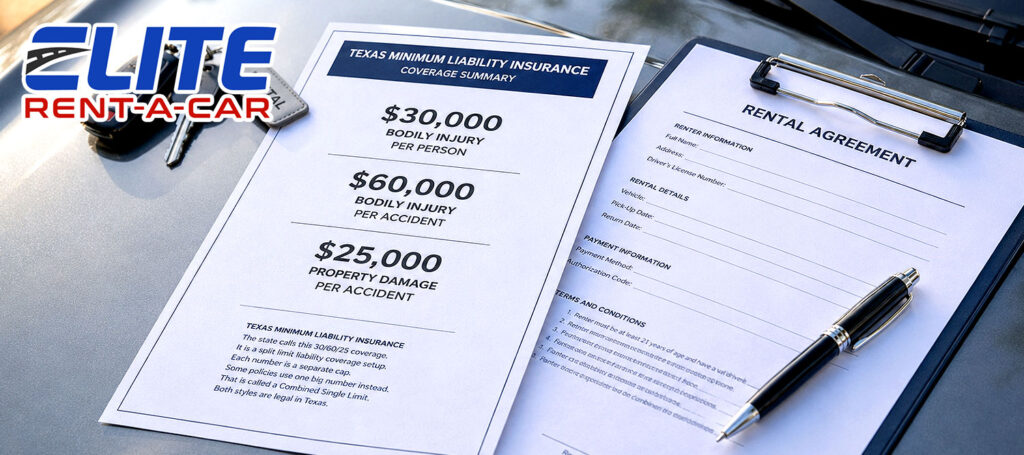
The state calls this 30/60/25 coverage. It is a split limit liability coverage setup. Each number is a separate cap.
- $30,000 bodily injury per person. This is the bodily injury liability per person cap. It is the most your insurer pays for one hurt person.
- $60,000 bodily injury per accident. This is the bodily injury liability per accident cap. If three people are hurt, $60,000 is the total for all of them.
- $25,000 property damage per accident. This is your property damage liability limit. It pays for the other car, a fence, or a wall.
Some policies use one big number instead. That is called a combined single limit. Both styles are legal in Texas.
The Law Behind the Numbers
These state minimum liability limits come from Texas Transportation Code Section 601.072. That section sits inside the Texas Motor Vehicle Safety Responsibility Act, which is Chapter 601 of the Transportation Code.
The Texas financial responsibility law has a simple rule. You must be able to pay for harm you cause. Most drivers do this by buying Texas minimum liability insurance. You must keep proof of financial responsibility in the car.
Texas is an at-fault state under its insurance rules. The driver who causes the crash pays for it. That is why liability limits matter so much here.
What This Coverage Never Pays For
A liability-only policy helps other people. It does not help you. It will not pay for:
- Your own injuries
- Your own car
- The rental car you damage
Many drivers add higher liability limits, 100/300/100 for a small extra cost. Others add uninsured motorist coverage in Texas and underinsured motorist coverage. Those help when the other driver has nothing. Both come from Chapter 1952 of the Texas Insurance Code. Personal injury protection (PIP) in Texas is optional under that same chapter. Your insurer has to offer it. You can say no in writing.
Does the Rental Company Have to Give You Liability Coverage?
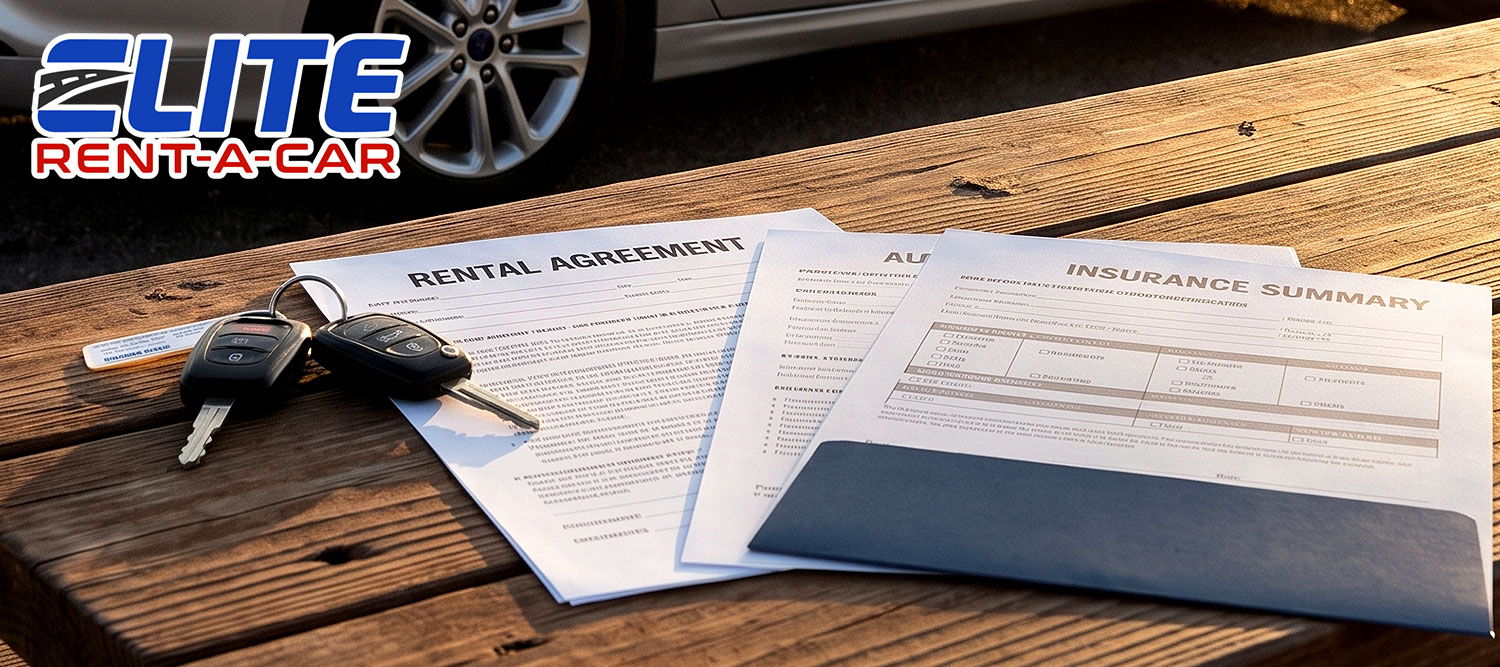
Yes. Texas rental car insurance rules mean every major rental company builds the state floor into the rental rate. That is the rental company state-minimum liability, and it is the same 30/60/25 you would carry on your own car.
“Included” Can Be Misleading
The included coverage is thin. It stops at $30,000 per hurt person. One trip to the emergency room can pass that number fast.
There is also a question of primary vs secondary rental coverage. This decides which policy pays first. In most cases, your own policy responds first for a personal rental. The rental company’s coverage sits behind it.
The Graves Amendment
The Graves Amendment protection is a federal law. You can find it at 49 U.S.C. Section 30106. It blocks most claims that blame a rental firm just for owning the car.
This limits rental companies’ vicarious liability. It pushes the risk back to the driver. But a hurt person can still sue the firm for its own mistakes. One example is a negligent entrustment claim. That is when a firm hands keys to a driver it should have turned away.
How Your Personal Texas Auto Policy Applies to a Rental Car
This is the part most people search for. Does my auto insurance cover a rental car? For a personal trip inside the United States, the answer is usually yes.
Temporary Substitute Auto
Your Texas personal automobile policy treats a rental much like your own car. The wording calls it a temporary substitute auto. Some forms call it a non-owned auto coverage case. Wording like this comes from forms built by the Insurance Services Office (ISO).
The short version: coverage follows the driver, not the car.
It Transfers at Your Limits, Not Better Limits
Here is the trap. If you carry only the state floor, that is exactly what you take into the rental. Your liability does not grow just because the car is rented.
Your comprehensive and collision extension works the same way. A $500 deductible on your car is a $500 rental car damage deductible on the rental. This gives you physical damage protection for your rental car. It also gives you rental car theft and vandalism coverage. But it works only if you carry those coverages now.
| Coverage type | Extends to a Texas rental? | At what limit | Common gap |
| Liability | Usually yes | Your limits, often 30/60/25 | Too low for a bad crash |
| Collision | Only if you carry it | Your deductible | You still pay the deductible |
| Comprehensive | Only if you carry it | Your deductible | Theft claims can be slow |
| Uninsured motorist | Usually yes | Your limits | Optional, so many skip it |
| Rental reimbursement coverage | Pays for a rental while your car is fixed | Daily cap | Does not help you rent for a vacation |
When Your Policy Does Not Follow You
Watch out for these gaps:
- Business use exclusion. Most policies stop at work trips. A work rental may need hired and non-owned auto coverage instead.
- Drivers who are not listed. Learn the split between the named insured vs permissive driver on your policy. Then add every authorized additional driver to the rental deal.
- Rentals outside the country. Mexico rental car tourist insurance must be bought separately. Your Texas policy stops at the border.
- Long rentals. Texas rental waiver law defines a rental agreement as 30 days or less, so longer deals can fall outside normal rules.
If you do not own a car at all, a non-owner car insurance policy gives you liability that travels with you.
The Gap Nobody Mentions: Loss of Use, Diminished Value, and Fees
Say you dent a rental. The repair bill is only part of what the company charges you.
- Loss of use charges. The company bills you for the money it lost while the car sat in a shop.
- Diminished value claim rental car. A repaired car is worth less than a clean one. Some contracts pass that drop to you.
- Administrative fee after rental damage. This is a flat paperwork charge added on top.
A Simple Example
A car rents for $60 a day. Repairs take eight days. That is $480 in loss of use. Add a $200 admin fee and a $700 diminished value charge. Your extra bill is close to $1,380, and that is before the repair itself.
Many personal policies pay these items only in part. Some skip them. That single coverage gap between policies is the main reason the counter waiver exists.
What the Rental Counter Sells You
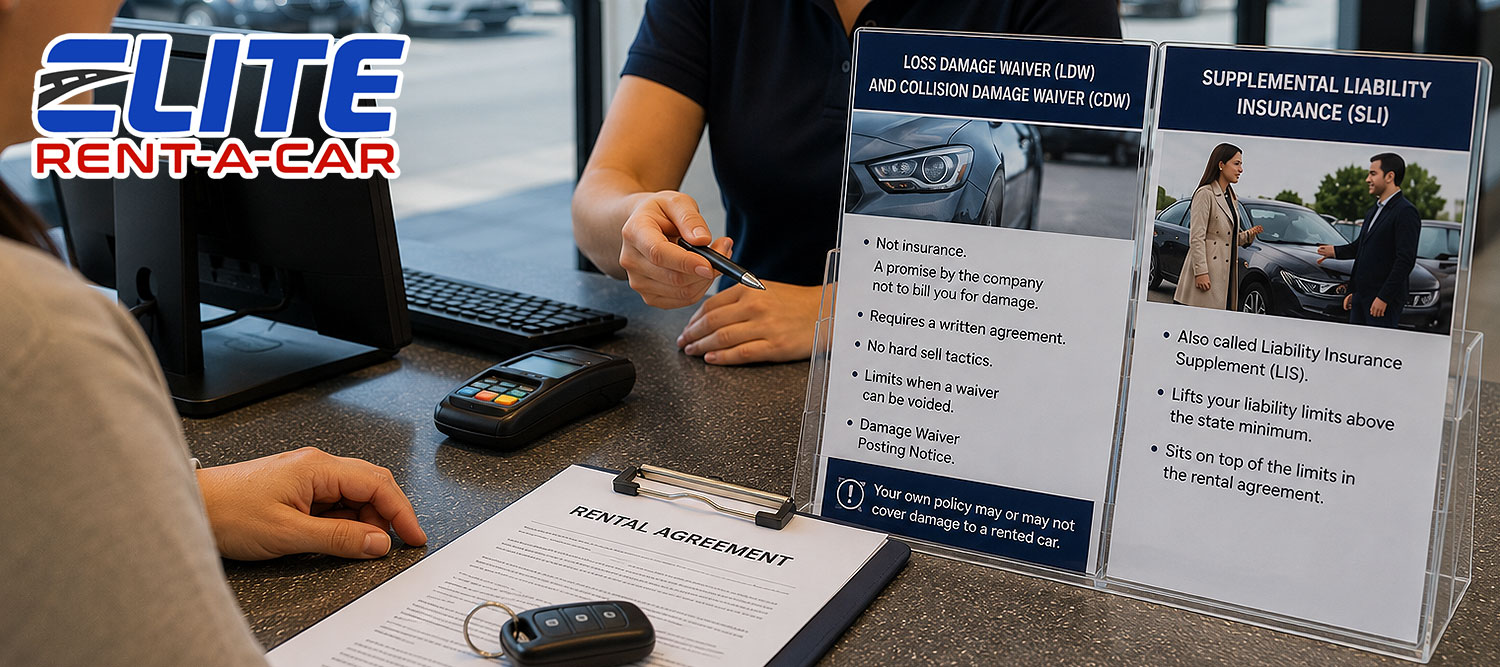
State law sets the menu. Texas Insurance Code Section 4055.053 lists what a rental firm may sell you. The rest of the rules sit in Chapter 4055 of the same code.
Here are your rental counter insurance options.
Loss Damage Waiver and Collision Damage Waiver
A loss damage waiver (LDW) and a collision damage waiver (CDW) are not insurance. They are a promise by the company not to bill you for damage.
Texas Business and Commerce Code Chapter 91 sets the rules for how these are sold. It calls for a written deal. It bans hard sell tactics. It limits when a firm can void a waiver. It also adds a damage waiver posting notice rule. Section 91.053 makes firms post a sign. The sign warns Texas renters that their own policy may or may not cover damage to a rented car.
Read the rental agreement insurance terms before you sign. A waiver can be voided if damage was caused on purpose or through very reckless driving.
Supplemental Liability Insurance
Supplemental liability insurance (SLI) lifts your limits above the state floor. Some firms call it a liability insurance supplement (LIS). State law names it too. Insurance Code Section 4055.053 calls it excess liability coverage rental car cover. It sits on top of the limits in the rental deal.
Personal Accident and Personal Effects
Personal accident insurance (PAI) pays for injuries to you and your passengers. Personal effects coverage (PEC) pays for stolen bags and gear.
Both often repeat what your health plan or home policy already does.
| Product | What it covers | Typical daily cost | Skip it if |
| LDW or CDW | Damage to the rental car and its fees | $15 to $35 | You have collision and can absorb the extra fees |
| SLI or LIS | Liability above 30/60/25 | $12 to $18 | You carry 100/300/100 or more |
| PAI | Injury costs for you and riders | $5 to $8 | You have solid health coverage |
| PEC | Stolen personal items | $4 to $7 | Your home or renters policy covers off-site theft |
The daily cost of rental insurance adds up fast on a long trip. Knowing what rental insurance to skip can save real money.
When Your Credit Card Covers the Rental
A credit card rental car insurance benefit can help, but it has limits.
Most Visa and Mastercard auto rental collision damage waiver benefits are second in line. They pay only after your own policy pays. A few cards pay first. Two good ones are American Express Premium Car Rental Protection and the Chase Sapphire Reserve card. Both can pay first on the cars they allow.
Card deals almost never add liability. Many leave out big vans and trucks. Many also exclude luxury and exotic rental car insurance. Some skip loss of use.
To use the benefit, you must pay with that card and turn down the counter waiver. Read your guide to benefits first, since terms change often.
Peer-to-Peer Rentals Are Different
Peer-to-peer car sharing insurance is not like a counter rental. Texas wrote its own law for it. You will find it in Chapter 113 of the Business and Commerce Code. The Texas Legislature passed it in 2021.
Section 113.0051 says the car-sharing program must take on the owner’s liability during the sharing period. The amount cannot fall below the Chapter 601 minimums. Section 113.0055 applies the Graves Amendment idea to owners and platforms, so neither is liable just for owning the car.
For Guests Who Rent
Pick your guest protection plan tiers with care. A cheaper tier means a bigger deductible.
Here is the key warning. Most personal policies exclude cars rented out through a platform. Your own coverage may vanish the moment you book.
For Hosts Who List a Car
Car-sharing host liability in Texas rules put real duties on you. Check your host protection plan limits before your first booking. Tell your insurer you are listing the car. Frequent hosts often need a commercial policy instead.
Drivers who rent cars for Uber or Lyft work hit the same wall. Rideshare vehicle rental insurance is a separate buy. HyreCar built its whole business on that need.
Truck, Van, and Moving Rentals
Moving truck rental liability coverage is its own thing. Most car policies do not cover a big box truck.
Truck rental companies sell their own plans. Buy one unless you have checked your policy. The American Car Rental Association tracks how the trade works here.
Is 30/60/25 Enough for a Rental in Texas?
Is state minimum enough coverage? For a serious crash, no.
Two big groups track crash data. One is the Insurance Institute for Highway Safety (IIHS). The other is the National Highway Traffic Safety Administration (NHTSA). Both show how bad a wreck can get. A ride in an ambulance costs a lot. So does surgery. So does a night in a bed. Add them up and one hurt person can pass $30,000.
When medical bills exceed minimum coverage, the shortfall does not disappear. Once you hit exhausted liability limits, you are the one who owes the rest. That means damages exceeding policy limits put your personal assets at risk after a crash, including wages and savings.
How Much Liability Insurance Do I Need?
Most agents suggest 100/300/100 as a starting point. Raising limits is cheap. Moving from the state floor to 100/300/100 often costs less than $30 a month.
The cost of Texas minimum liability insurance is low, but the risk it leaves behind is not. Compare cheap liability insurance quotes Texas carriers offer, then look at what a small upgrade buys.
Many firms write these policies. The list holds State Farm, GEICO, Progressive, and Allstate. It holds USAA, Farmers Insurance, and Texas Farm Bureau Insurance. Non-standard carriers serve drivers with tickets or gaps. One note: the Texas FAIR Plan covers homes, not cars. It will not help with a rental.
Three groups can help you shop. The Office of Public Insurance Counsel (OPIC) puts out rate charts for Texas. The National Association of Insurance Commissioners (NAIC) tracks complaints. The Insurance Information Institute writes in plain words.
Rental Coverage vs Personal Policy Comparison
A rental coverage vs personal policy comparison usually comes down to how often you rent.
- Rent once a year: buying at the counter is fine.
- Rent monthly: raise your own limits instead. It is cheaper over a year.
What to Do After a Rental Car Accident in Texas
A rental car accident claim Texas case can involve four or five insurers at once. Good notes protect you.
At the Scene
- Call 911 and get a police report after a rental crash. Texas requires a report for injury crashes and larger property damage.
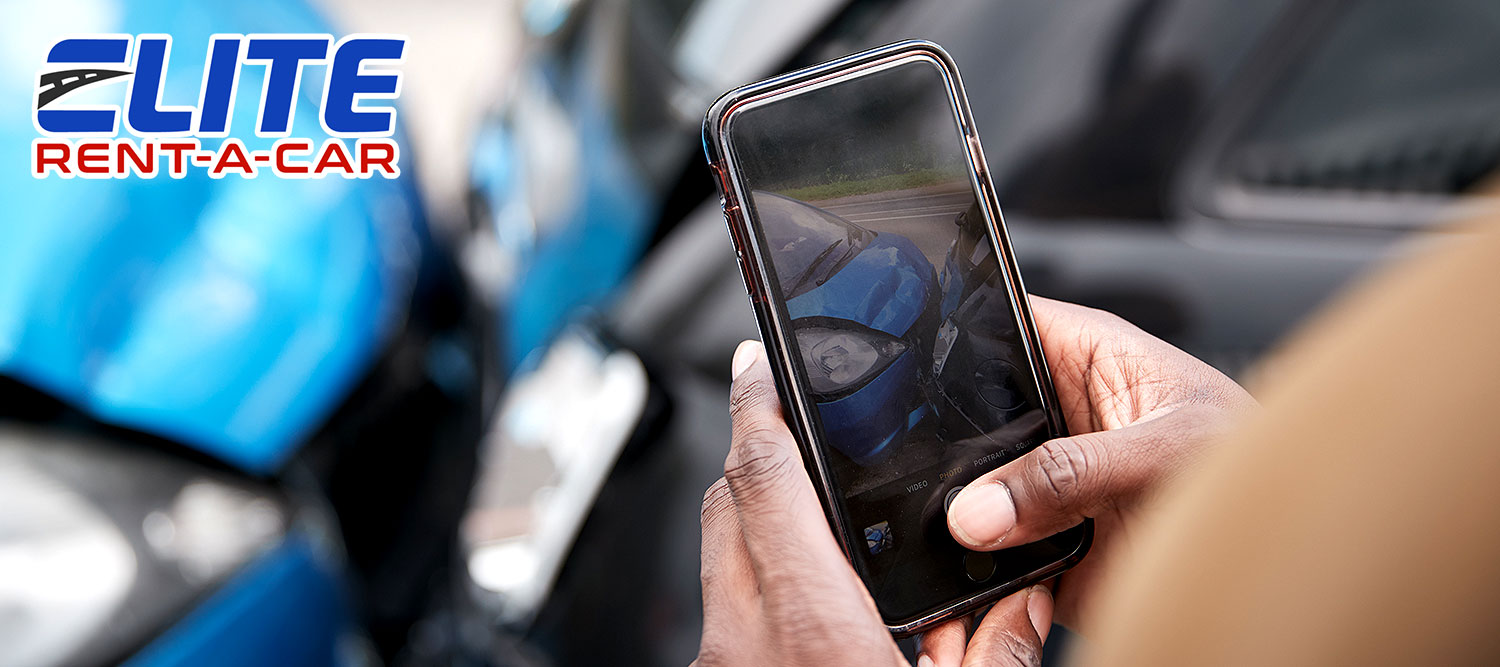
- Photograph every vehicle, the road, and the damage.
- Collect names, phone numbers, and insurance details.
- Do not admit fault. At-fault driver liability in a rental gets decided later, using evidence.
Who to Call and in What Order
Call the rental company first. Then call your own insurer. Then call your credit card benefit line if you paid with a card.
Rental firms often chase your own policy first. They do this even when the other driver caused the crash. This is called subrogation against the renter.
How the Claims Get Sorted
A third-party bodily injury claim goes against the at-fault driver. Layering multiple coverage sources is normal here. Four sources can touch one crash. Your policy is one. The other driver’s policy is two. The rental firm’s coverage is three. Your card deal is four.
Texas uses proportionate responsibility. Under the 51% bar rule, you recover nothing if you are more than half at fault. Your payout also drops by your share of blame.
Are the injuries bad? A lawyer may send an insurance adjuster demand letter for you. The State Bar of Texas offers a service to help you find one.
Rules That Keep You Legal on the Road
Texas checks coverage in more than one way.
- Digital proof of insurance card images on your phone are accepted.
- Electronic insurance verification runs on a system called TexasSure. It links your insurer to the Texas Department of Public Safety (DPS). It also links to the Texas Department of Motor Vehicles (TxDMV).
- A lapse can trigger registration suspension for lapsed coverage.
Driving without insurance penalties Texas courts hand down start small. A first offense brings a fine of $175 to $350. Uninsured driver fines Texas judges apply can hit $1,000 later on. A judge may take your license too. You may also face an SR-22 filing requirement.
Staff at the counter run their own insurance verification at pickup. There is a valid driver’s license rental requirement as well. Bring a credit card in your own name.
The Texas Department of Insurance (TDI) watches over carriers in the state. It also answers questions from buyers.
Your 5 Minute Pre-Rental Checklist
Do this before you fly. It works for Dallas Fort Worth International Airport. It works for George Bush Intercontinental Airport. It works for Austin Bergstrom International Airport too.
- Pull up your declarations page. Write down your liability limits and deductibles.
- Call your insurer. Ask one question: does my policy cover a rental car in Texas, and at what limits?
- Check your card benefit. Confirm it is primary or secondary, and ask about loss of use.
- List every driver. Anyone who might drive must be on the rental contract.
- Photograph the car. Do it at pickup and at drop-off, in good light, from all four corners.
That last step wins arguments. Photos from the DFW rental car center have settled more damage disputes than any policy clause.
Frequently Asked Questions
Does Texas require rental car insurance?
No. Do I need rental car insurance is the wrong question. Rental firms must already include state minimum liability in the price. Extra products are optional.
Does my Texas car insurance cover a rental car?
Yes, in most cases, for a personal trip in the United States. Liability carries over. So do collision and comprehensive. They use your own limits and your own deductibles.
Do rental cars come with insurance in Texas?
Yes. Every rental has 30/60/25 liability built in. It does not cover damage to the rental car.
Should I buy the loss damage waiver in Texas?
Buy it if you have no collision coverage, or if you cannot absorb loss-of-use and admin fees. Skip it if you carry collision and a card benefit that covers the extras.
What happens if I have liability-only insurance and damage a rental?
You owe the full repair bill plus fees. Your policy will pay the other driver, but not the rental company.
Does Texas minimum liability cover a Turo rental?
Not through your own policy, in most cases. Most policies shut off for peer-to-peer trips. The Turo plan steps in instead.
Can I rent a car in Texas without insurance?
Yes. Buy the counter liability product, or carry a non-owner policy.
Does my Texas policy cover a rental car in Mexico?
No. You need separate Mexico tourist auto insurance, sold by the hour, day, or week.
Is declining the rental company’s coverage risky?
Declining the rental company’s coverage is safe only when you know what replaces it. Confirm your own coverage first, in writing if you can.