
You walk up to the rental car counter. The agent slides a form across the desk. You see words like CDW, LDW, SLI, and PAI. You have no idea what any of them mean. The line is long. The agent is waiting. You check “yes” to everything just to be done with it.
Sound familiar? You are not alone.
Most people do not know what car rental insurance they already have. So they buy extra coverage they do not need. A full counter bundle of CDW, SLI, PAI, and PEC can add $40 to $60 per day to your rental bill. That is an extra $420 on a one-week trip.
This guide breaks down every type of car rental insurance in plain language. You will learn what each covers, how much it costs, and what you probably already have. By the end, you will know exactly what to buy and what to skip.
What Is Car Rental Insurance?
Car rental insurance is a set of protections that cover you when you drive a rented vehicle. It can cover damage to the car, injuries to other people, your own medical costs, and even your belongings.
Here is the key thing most people miss. Some of these products are waivers, not real insurance. A collision damage waiver (CDW) or loss damage waiver (LDW) is a contract where the car rental company agrees not to charge you for damage. It is not a traditional insurance policy. By contrast, supplemental liability insurance (SLI) and personal accident insurance (PAI) are actual insurance products that pay out claims.
Why does this matter? Because waivers and insurance work differently. They also have different rules, exclusions, and claim processes.
The rental car company carries its own insurance on the vehicle. But that policy only covers the minimum required by state law. If you cause an accident, that minimum is often not enough. The financial gap falls on you. That is why rental companies offer extra coverage at the counter.
According to WalletHub, rental car insurance costs $61 per day on average, depending on how much coverage you buy and where you rent. A serious accident without coverage can result in damage bills of $2,000 to $25,000 or more, plus loss-of-use fees averaging $86 per day while the car is being repaired.
The 5 Types of Car Rental Insurance Explained
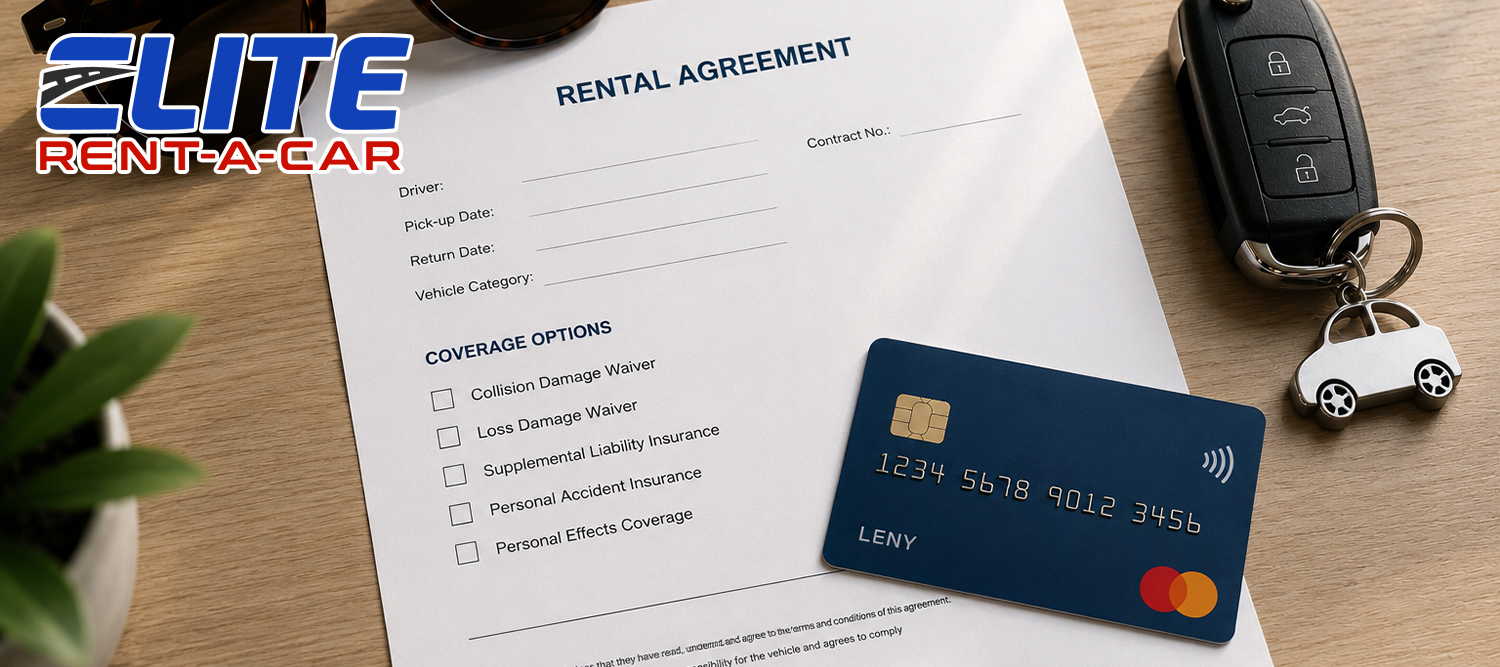
Below is a quick look at all five main types before we go deeper into each one.
| Coverage Type | Abbreviation | What It Protects | Avg. Daily Cost (Counter) |
| Collision Damage Waiver | CDW | Rental car damage from a collision | $15 to $30 |
| Loss Damage Waiver | LDW | Damage, theft, and vandalism | $20 to $40 |
| Supplemental Liability Insurance | SLI | Injuries and damage to third parties | $12 to $17 |
| Personal Accident Insurance | PAI | Your medical bills and passenger costs | $6 to $9 |
| Personal Effects Coverage | PEC | Theft of your belongings from the car | $1 to $6 |
1. Collision Damage Waiver (CDW)
CDW is the most common product offered at the rental counter. It is also the most misunderstood.
A collision damage waiver is not insurance. It is a legal agreement where the rental company waives its right to charge you for damage to the vehicle. If the car gets dinged, dented, or totaled in a collision, the company covers the cost. You do not pay.
What CDW covers:
- Physical damage from a collision
- Vandalism (in many cases)
- Loss of use fees while the car is being repaired
- Some towing costs (varies by company)
What CDW does NOT cover:
- Damage to other vehicles or people
- Your personal injuries
- Damage caused by drunk driving or violating rental terms
- Damage to tires, windshield, roof, undercarriage, mirrors, or interior (in most cases)
The deductible problem. Standard CDW still comes with a deductible. That can be $500 to $3,500, depending on the rental company and vehicle type. You pay that amount before the waiver kicks in.
Want zero out of pocket? Look for Super CDW or zero-deductible coverage. This upgrades your CDW so you owe nothing if the car is damaged. It costs an extra $10 to $30 per day on top of the standard CDW rate.
Key rule. CDW coverage is voided if you break the rental agreement terms and conditions. That includes driving under the influence, letting an unauthorized driver take the wheel, or taking the car off approved roads.
Cost benchmark: $15-$42 per day for economy vehicles. Higher for luxury or premium cars.
2. Loss Damage Waiver (LDW)
LDW is the broader version of CDW. It adds theft protection on top of collision coverage.
If your rental car is stolen while an LDW is in place, you are not responsible for the cost of replacing it. CDW alone may not cover theft. That is the main difference.
What LDW covers:
- Everything CDW covers (collision damage)
- Theft of the entire vehicle
- Vandalism
What LDW does NOT cover:
- Damage to other cars or property
- Your injuries or the passenger’s injuries
- Personal belongings inside the car
- Damage from driving violations or reckless behavior
Here is something that confuses many renters. Car rental companies often use CDW and LDW interchangeably. But technically, LDW is the wider product. Always read the actual contract to see what is included. Never assume.
LDW can be purchased at the counter for $20 to $40 per day.
Cost benchmark: $20-$40 per day at the rental counter.
3. Supplemental Liability Insurance (SLI)
Supplemental liability insurance is real insurance, not a waiver. It is one of the most important coverages to understand.
Every driver in almost every U.S. state must carry bodily injury liability and property damage liability insurance. Rental companies meet this requirement with a bare-minimum state-mandated policy. In states like Florida and New Jersey, those minimums are dangerously low. A serious accident can easily go above those limits.
SLI fills that gap. It raises your liability coverage up to a combined single limit of $300,000 to $1,000,000 or more, depending on the rental company and vehicle class.
What SLI covers:
- Damage or injuries you cause to other people
- Damage to other vehicles or property
- Legal costs in some cases
What SLI does NOT cover:
- Damage to the rental car itself
- Your own injuries
- Your personal belongings
SLI also goes by these names:
- ALI (Accident Liability Insurance)
- Liability Insurance Supplement (LIS)
- SLP (Supplemental Liability Protection)
- Renter Liability
The credit card gap. This is the big one. Credit cards almost never include liability coverage. If you rely on your credit card for rental protection and skip SLI, you have no liability safety net beyond the rental company’s minimum. That could leave you personally responsible for tens of thousands of dollars.
Cost benchmark: $10-$20 per day at the rental counter.
4. Personal Accident Insurance (PAI)
Personal accident insurance covers medical costs for you and your passengers if you are hurt in a crash while driving the rental car.
What PAI covers:
- Emergency medical care
- Ambulance fees
- Accidental death benefits
- Injury benefits for passengers
When you likely do NOT need PAI:
- You have personal injury protection (PIP) or MedPay on your auto policy
- You have solid health insurance coverage
- You are renting in the U.S. for personal use
When PAI is worth thinking about:
- You are traveling internationally, where your U.S. health insurance is not accepted
- You have no health insurance
For international travel, a travel insurance policy with emergency medical benefits is often a better choice than PAI. It covers medical emergencies from any cause, not just car accidents.
Cost benchmark: $6-$9 per day.
5. Personal Effects Coverage (PEC)
Personal effects coverage protects your belongings if they are stolen from the rental car during your trip. Cameras, laptops, luggage, and other items may be covered up to a set dollar limit.
What PEC covers:
- Theft of personal items from inside the rental car
- Some damage to belongings (varies by policy)
When you can skip PEC:
- You have a homeowners’ insurance or renters insurance policy. Most personal property coverage extends to off-premises locations, including rental cars.
- You have travel insurance with baggage loss or damage benefits.
Important: Your PEC pays only after your deductible is met. If the stolen item costs less than your deductible, you get nothing. Check your deductible amount before deciding if PEC is worth it.
Cost benchmark: $1-$6 per day.
How Much Does Car Rental Insurance Cost?
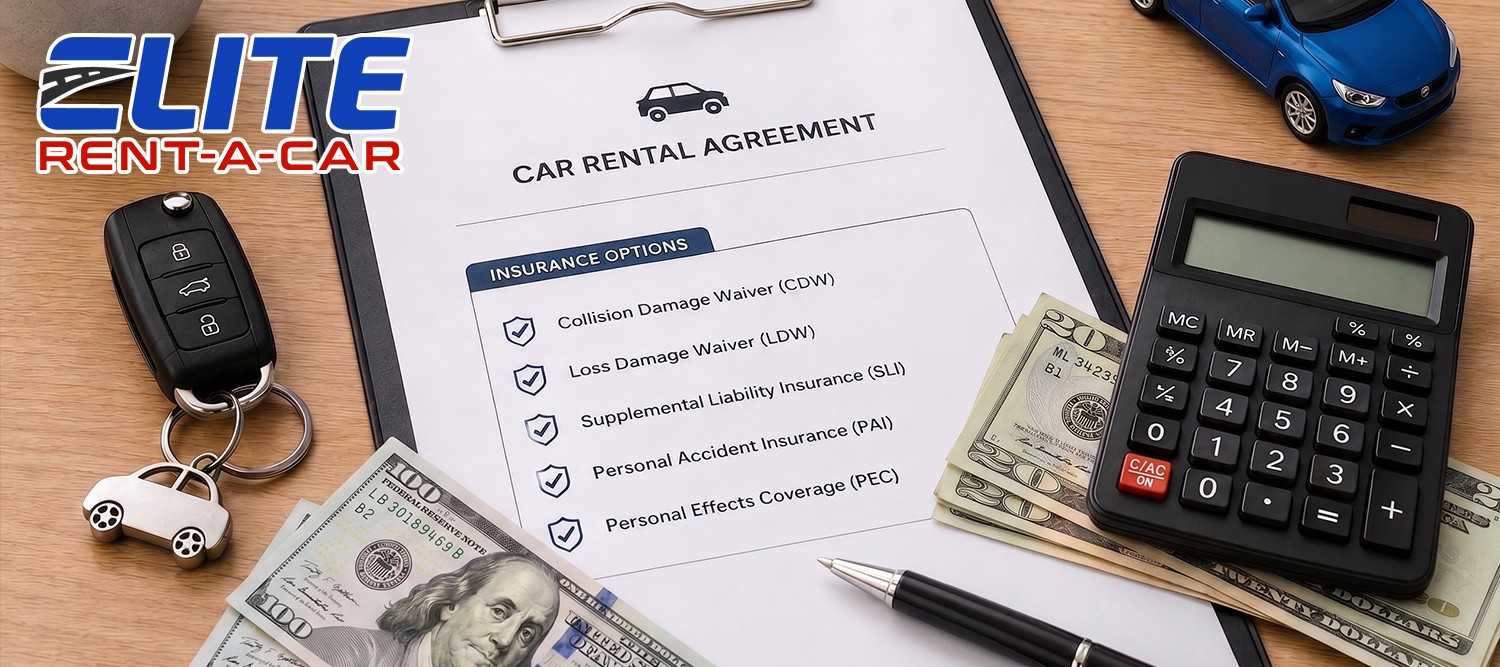
Here is a full cost comparison by source, based on 2025-2026 data.
| Coverage Source | CDW/LDW Daily Cost | Full Bundle Daily Cost |
| Rental counter (CDW only) | $15 to $30 | $40 to $60 (CDW + SLI + PAI + PEC) |
| Rental counter (LDW) | $20 to $40 | Varies by company |
| Third-party | ~$13 | ~$40 (Bonzah full bundle) |
| Credit card CDW benefit | $0 for eligible cardholders | Damage and theft only |
| Add-on to personal auto policy | $3 to $10 per month | Rental reimbursement only |
Key numbers to keep in mind:
- A full week with counter coverage can add $280 to $420 to your bill
- Average loss-of-use fee if uninsured: $86 per day
- The average rental car deductible on a personal auto policy: $500 to $1,000
- A full damage bill without any coverage: $2,000 to $25,000+
Which Car Rental Insurance Do You Actually Need?
Use these six scenarios to find your situation. Pick the one that fits you best.
Scenario 1: You Have Full Coverage Personal Auto Insurance
Full coverage means your policy includes collision, comprehensive, and liability coverage. This is the most common situation for U.S. drivers.
| Coverage Type | What to Do |
| CDW / LDW | Safe to skip. Your collision and comprehensive apply. |
| SLI | Safe to skip. Your liability coverage extends to the rental. |
| PAI | Safe to skip. Your PIP or MedPay covers injuries. |
| PEC | Safe to skip. Your homeowners or renters insurance covers this. |
Watch for these gaps even with full coverage:
- Your deductible still applies. A $1,000 deductible means $1,000 out of pocket.
- Your policy may not cover loss-of-use fees or diminished value.
- Use a primary-coverage credit card like the Chase Sapphire Reserve or the Capital One Venture X to fill those gaps for free.
Scenario 2: You Have Liability-Only Insurance
Your policy covers damage to other people but not your own car. That means you have no collision or comprehensive coverage to extend to the rental.
| Coverage Type | What to Do |
| CDW / LDW | Buy it. You have no collision protection. |
| SLI | Safe to skip. Your liability policy already covers third parties. |
| PAI | Evaluate based on your health insurance. |
| PEC | Skip if you have homeowners or renters insurance. |
Scenario 3: You Have No Personal Auto Insurance
If you do not own a car or carry any auto coverage, the rental company will require you to purchase at least the minimum liability coverage.
| Coverage Type | What to Do |
| CDW / LDW | Buy it, or use a qualifying credit card with primary coverage. |
| SLI | Buy it. The rental company’s minimum is not enough in most states. |
| PAI | Consider it if you do not have solid health insurance. |
| PEC | Skip if you have homeowners or renters insurance. |
According to Progressive, without your own auto policy, the credit card’s secondary coverage often becomes primary for collision. But you still have no liability coverage through the card.
Scenario 4: You Are Renting Internationally
Most U.S. auto insurance policies do not extend coverage abroad. Canada is often an exception, but always verify with your insurer first.
| Coverage Type | What to Do |
| CDW / LDW | Buy it. Your personal policy almost certainly does not apply. Verify your credit card’s country exclusions first. |
| SLI | Buy it. U.S. liability coverage does not apply overseas. Local law may require it. |
| PAI | Consider travel insurance instead. It covers medical emergencies from any cause, not just car accidents. |
| PEC | Check your travel insurance policy first. |
Scenario 5: You Are Renting a Luxury or Exotic Car
Luxury vehicles like BMWs and Mercedes-Benzes are often excluded from credit card coverage and may exceed the limits of your personal auto policy.
| Coverage Type | What to Do |
| CDW / LDW | Buy it. Most credit cards exclude luxury vehicles. |
| SLI | Buy or verify. Higher-value cars mean higher financial risk if you cause damage. |
The Chase Sapphire Preferred card, for example, excludes many luxury models, including certain BMW, Mercedes-Benz, Cadillac, and Lincoln vehicles. Damage or theft of a luxury car could cost far more than the $50,000 to $75,000 limit on most card policies.
Scenario 6: You Are on a Business Trip
Your personal auto policy typically does not extend to business use of a rental car.
| Coverage Type | What to Do |
| CDW / LDW | Check with your employer first. Many companies carry commercial auto policies that cover employee rental cars. If not, buy it. |
| SLI | Buy or verify employer coverage. |
| PAI | Check the employer’s travel insurance policy. |
What to Do If Your Rental Car Is Damaged or Stolen
If something goes wrong, here is what to do step by step.
Step 1: Take photos and videos of all damage right away. Note the date, time, and location.
Step 2: Report the incident to the rental car company immediately. This is required under your rental agreement.
Step 3: File a police report if the car was stolen or if significant damage occurred.
Step 4: Notify your credit card’s benefit administrator within the required window. Most cards require notice within 30 to 60 days of the incident.
Step 5: File with your personal auto insurer if you are relying on that coverage.
Step 6: Gather and submit all documents.
Documents you will need:
- Signed rental agreement
- Copy of your driver’s license
- Itemized repair invoice from the rental company
- Proof of payment (credit card statement)
- Police or incident report (if applicable)
- Final damage settlement letter from the rental company
- Photos of the damage
Claim reimbursement timeline: Third-party providers process complete claims in about 3 business days. Credit card claims typically take 4 to 8 weeks to resolve.
Car Rental Insurance: Frequently Asked Questions
Q: Do I need insurance to rent a car?
You do not need to buy extra insurance if your personal auto policy with collision and comprehensive extends to rentals and you have adequate liability coverage. If you have no personal auto insurance, the rental company will require you to purchase at least minimum liability coverage before you can take the car.
Q: What is the difference between CDW and LDW?
A collision damage waiver (CDW) covers damage to the rental car from a collision. A loss damage waiver (LDW) adds theft and vandalism protection on top of that. Many companies use both terms for the same product. Always confirm what is included in your specific contract.
Q: Does my credit card cover rental car insurance?
Many travel credit cards include CDW or LDW protection. But you must pay the full rental with that card and decline the counter CDW to activate it. Credit cards typically do not cover liability, personal injury, or belongings. Premium cards like the Chase Sapphire Reserve and Capital One Venture X offer primary coverage. Most other cards offer secondary coverage.
Q: How much does rental car insurance cost per day?
Counter CDW costs $15 to $30 per day. A full bundle of CDW, SLI, PAI, and PEC costs $40 to $60 per day, adding $280 to $420 to a one-week rental. Third-party providers charge roughly 40% to 65% less than counter rates.
Q: Is rental car insurance worth it?
For most renters with full personal auto coverage and a qualifying travel credit card, counter insurance is not worth the extra cost. However, it becomes worth buying if you have high deductibles, are renting internationally, renting a luxury car, have no personal auto policy, or are traveling to a country where your card’s coverage does not apply.
Q: Does my car insurance cover rental cars internationally?
Most U.S. personal auto policies do not extend coverage outside the United States. Canada is a common exception, but verify with your insurer before you travel. Credit cards also have country-specific exclusions. For international rentals, buying local CDW, LDW, or a third-party policy is strongly recommended.
Q: What is supplemental liability insurance (SLI) for a rental car?
Supplemental liability insurance (SLI) is a separate insurance policy that increases your liability coverage beyond the rental company’s state-required minimum. It covers injury and property damage you cause to third parties, typically up to $300,000 to $1,000,000. Credit cards do not cover liability. This makes SLI the most important coverage gap for renters who rely on their card for CDW protection.
Q: Can I skip the counter CDW if I have a credit card?
Yes, if your card offers qualifying CDW or LDW protection. To activate it, you must pay the full rental with that card and explicitly decline the rental company’s CDW. Then all listed drivers must be on the rental agreement. Always check your card’s coverage limits, country exclusions, and rental duration limits before you decline.