
Renting a car sounds easy. You pick up the keys and start your trip. But if you skip a quick check, you may face big problems later. Many drivers forget to inspect the car and end up paying for damage they did not cause. A simple rental car inspection checklist can save you money, stress, and time.
Before you drive away, the car becomes your responsibility. That means every scratch, dent, or issue can be linked to you if it is not reported. According to experts, you should always check the vehicle’s condition and document everything before leaving the lot.
This guide will help you understand things to inspect before driving off in a rental car using simple steps. You will learn how to do a quick pre-rental inspection checklist, check safety features, and avoid common mistakes.
Why Inspecting a Rental Car Before Driving Matters
When you rent a car, you take full responsibility for it the moment you leave the lot. That is why a vehicle condition report and proper inspection are so important.
1. Avoid False Damage Charges
One of the biggest reasons to inspect a rental car is to avoid unfair charges. Many renters are billed for damage they did not cause. A clear car damage report with photos and notes protects you from this problem.
Always check for:
- Scratches
- Dents
- Paint damage
- Interior issues
Then document everything using photos or videos. This acts as your defect reporting system.
2. Ensure Safety Before Driving
A rental car may look fine, but hidden issues can cause danger. A proper safety inspection checklist helps you check:
- Tires and pressure using the Tire Pressure Monitoring System (TPMS)
- Brakes and the Anti-lock Braking System (ABS)
- Warning lights from the Engine Control Unit (ECU)
We recommend checking these parts because they directly affect driving safety.
3. Prevent Breakdowns and Delays
No one wants a car to stop working during a trip. Checking fluid levels, battery condition, and systems like the transmission system and suspension system can prevent problems.
You should always inspect:
- Oil and coolant levels
- Battery system
- Fuel injection system
This simple step can help you avoid delays and roadside issues.
4. Understand Legal and Insurance Terms
Before driving, review your rental agreement verification and insurance details, like:
- Collision damage waiver (CDW)
- Liability insurance
- Comprehensive insurance
Knowing your coverage helps you understand your legal liability terms and avoid unexpected costs.
5. Confirm Fuel, Mileage, and Usage Rules
Many renters forget to check fuel and mileage rules. This can lead to extra fees.
Make sure to verify:
- Fuel level and type
- Odometer reading using the odometer
- Mileage limits
These details are part of your agreement and must match before you leave.
6. Protect Yourself with Documentation
Always create a full record before driving:
- Take photos and videos
- Save a digital inspection checklist
- Keep a signed vehicle audit checklist
This evidence helps in case of disputes and supports your claim if needed.
7. Get Comfortable Before Driving
Finally, adjust and test the car before leaving:
- Set mirrors and seat
- Learn controls like the speedometer and navigation
- Test features like Bluetooth connectivity and a mobile payment system
This ensures a smooth and safe driving experience.
Quick 5-Minute Rental Car Inspection Checklist

Before you drive away, take a few minutes to check the car. This simple step can protect you from damage claims and keep you safe on the road. A short inspection helps you spot problems early and avoid trouble later.
Step 1: Walk Around the Car (Exterior Check)
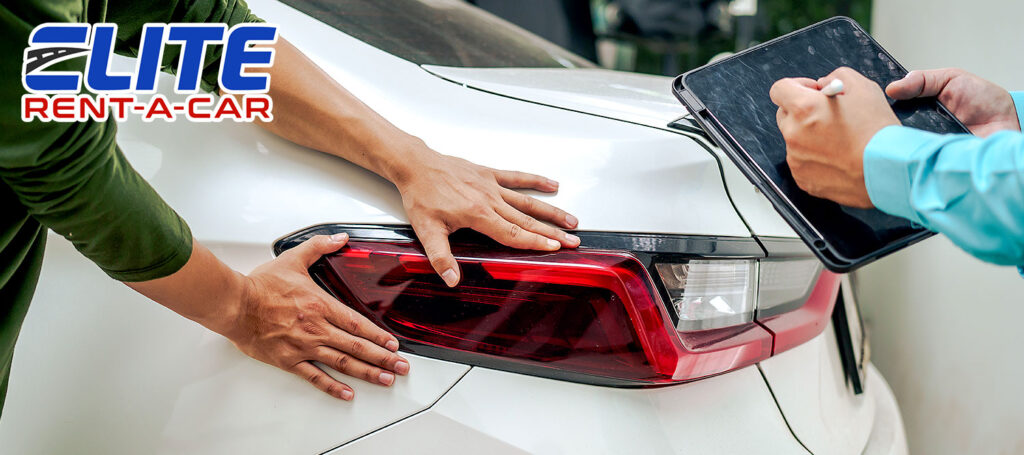
Start with a slow walk around the car. This helps you find any visible damage.
Check for:
- Rental car damage check
- Inspect the car body scratches
- Dents and dings check
- Paint condition review
- Bumper condition
- Side mirror condition
- Wheel rims damage
Look closely at the glass:
- Windshield cracks inspection
- Windows and mirrors
If you see anything, take photos right away. This is your photo proof of the car’s condition and helps prevent damage disputes.
Step 2: Check Tires and Wheels
Tires are very important for safety. Poor tires can lead to accidents.
Check:
- Tire condition check
- Tire tread depth
- Tire pressure check
- Cuts or bulges
Good tires improve control and reduce risk while driving.
Step 3: Test Lights and Signals
Lights help you see and be seen on the road.
Make sure these work:
- Headlights functionality
- Tail lights inspection
- Fog lights check
- Turn signals working
This is part of a basic safety inspection checklist.
Step 4: Look Inside the Car (Interior Check)
Now check the inside of the car.
Focus on:
- Car interior cleanliness
- Seat condition check
- Upholstery condition
- Floor mats condition
- Interior odor check
Also check storage areas:
- Glove compartment contents
- Trunk space inspection
- Spare tire presence
This ensures comfort and avoids later complaints.
Step 5: Test Controls and Features
Turn on the car and test the key systems.
Check:
- Dashboard warning lights
- Infotainment system test
- Air conditioning working
- Heater functionality
- Power windows operation
- Door locks check
- Radio and Bluetooth check
- USB ports working
- Navigation system test
Modern cars often include tools like a GPS navigation system and Bluetooth connectivity, so make sure they work.
Step 6: Start the Engine and Check Performance
Start the car and listen carefully.
Look for:
- Engine start check
- Engine noise inspection
- Unusual vibrations
Test driving basics:
- Brake functionality test
- Handbrake operation
- Steering response
- Acceleration response
This helps you detect early problems.
Step 7: Check Fluids and Safety Systems
Fluids keep the car running smoothly. Low levels can cause breakdowns.
Inspect:
- Fluid levels inspection
- Oil level check
- Coolant level check
- Brake fluid level
- Windshield washer fluid
Also check safety systems:
- ABS system check
- Airbags warning light
- Traction control system
These are part of the car’s core safety features.
Step 8: Review Documents and Policies
Before driving, confirm all paperwork.
Check:
- Rental agreement verification
- Insurance coverage check
- Damage liability terms
- Fuel policy confirmation
- Mileage limit check
- Registration papers verification
- Vehicle identification number (VIN)
Also understand:
- Collision damage waiver (CDW)
- Liability insurance
- Comprehensive insurance
This protects you legally.
Step 9: Check Fuel and Mileage
Fuel mistakes can cost a lot.
Verify:
- Fuel level check before driving
- Fuel type verification
- Fuel gauge accuracy
- Odometer reading
- Mileage tracking
For modern cars:
- Hybrid/electric battery level
- Charging cable availability
- EV charging compatibility
Step 10: Take Photos and Record Everything
This is one of the most important steps.
Do this before leaving:
- Take photos before rental
- Video inspection proof
- Document existing damage
- Timestamped inspection images
- Signed inspection form
These records act as your pre-trip inspection record and help avoid disputes.
Step 11: Adjust and Prepare to Drive
Before you move the car:
- Mirrors adjustment
- Seat position adjustment
- GPS setup before driving
- Familiarity with vehicle controls
- Test drive before leaving
This makes driving safer and easier.
Common Mistakes to Avoid When Picking Up a Rental Car
Even if you follow a checklist, small mistakes can still happen. Many renters make simple errors that lead to extra charges, stress, or safety risks. Most problems can be avoided with a few careful steps before driving away.
1. Skipping the Inspection
One of the biggest mistakes is not checking the car at all.
If you skip inspection:
- You may miss scratches or dents
- You could be charged for damage you did not cause
Failing to inspect and document damage can lead to disputes and unexpected costs.
2. Not Taking Photos or Videos
Many renters trust the rental company records. This is risky.
Always:
- Take photos of the exterior and interior
- Record a video walk-around
Without proof, it is hard to defend yourself in case of a claim. We strongly recommend documenting everything before leaving.
3. Ignoring Small Damage
Small scratches or marks may seem unimportant, but they matter.
Common mistakes include:
- Ignoring tiny dents
- Not reporting paint chips
- Missing interior stains
Even minor issues should be reported right away. Rental companies may charge you if they are not listed in your agreement.
4. Not Reading the Rental Agreement
Many people rush and skip reading the contract.
This can lead to:
- Hidden fees
- Unexpected rules
- Confusion about insurance
Ignoring the fine print and not reading it are among the most common rental mistakes.
5. Ignoring Fuel and Mileage Policies
Fuel and mileage rules are often misunderstood.
Mistakes include:
- Not checking the fuel level
- Forgetting fuel return rules
- Exceeding mileage limits
These errors can result in extra charges that are easy to avoid with a quick check.
6. Skipping Insurance Review
Some renters decline insurance without checking their coverage.
This can be risky because:
- Not all policies cover rental cars
- Deductibles may be high
Reviewing your insurance policy before driving to avoid costly surprises later.
7. Rushing the Pickup Process
Many people are in a hurry and skip key steps.
Rushing can lead to:
- Missing damage
- Forgetting documents
- Not testing the car
Taking just a few extra minutes can prevent problems later.
8. Not Testing the Car Before Driving
Some renters drive off without testing the car.
This can cause issues like:
- Poor brakes
- Steering problems
- Warning lights
Do a quick test drive to check performance before leaving.
9. Forgetting to Report Issues Immediately
If you find a problem after leaving, do not wait.
Always:
- Contact the rental company right away
- Report issues as soon as possible
Quick reporting helps protect you from being blamed later.
10. Assuming Everything Is Already Checked
Rental companies do inspect cars, but mistakes can happen.
Even with company checks:
- Damage may be missed
- Issues can still exist
We strongly recommend conducting your own inspection, even if the car appears to be in good condition.
Pro Tips for a Hassle-Free Rental Experience
A few smart tips can make your rental experience smooth and stress-free. Careful planning and a quick inspection can help you avoid problems and enjoy your trip with confidence.
1. Always Inspect in Good Lighting
Try to check the car in daylight or a well-lit area.
Why this helps:
- You can see scratches and dents clearly
- Small damage is easier to spot
- You avoid missing hidden issues
Poor lighting can hide damage, which may later be blamed on you.
2. Take Your Time and Do Not Rush
Many renters rush and skip important steps. This can lead to mistakes.
Take a few extra minutes to:
- Walk around the car
- Check inside and outside
- Test key features
Rushing the process can cause you to miss important details.
3. Use a Checklist Every Time
A checklist keeps you organized and helps you avoid forgetting anything.
With a checklist, you can:
- Follow a step-by-step process
- Cover exterior, interior, and safety checks
- Reduce the chance of missing issues
Using a checklist makes your inspection simple and complete.
4. Choose a Trusted Rental Company
Pick a well-known, reliable car rental company, such as Elite Rent a Car.
Benefits include:
- Better customer service
- Clearer policies
- Well-maintained vehicles
Trusted companies are more likely to provide safe and clean cars.
5. Keep Copies of All Documents
Always keep your rental records safe.
Save:
- Rental agreement
- Inspection report
- Photos and videos
These records help you if there is a dispute later.
6. Check Safety Features First
Safety should always come first.
Make sure to check:
- Brakes and lights
- Tires and pressure
- Warning lights on the dashboard
A quick safety check ensures the car is ready for the road.
7. Ask Questions Before Driving
If you are unsure about anything, ask the rental staff.
You can ask about:
- Fuel policy
- Insurance coverage
- Emergency contacts
Clear answers help you avoid confusion later.
8. Know What to Do in an Emergency
Be prepared before you start your trip.
Check:
- Roadside assistance details
- Emergency numbers
- What to do in case of a breakdown
Knowing these details can save time and stress during unexpected situations.
9. Test the Car Before Leaving
Do a quick test drive if possible.
This helps you:
- Check brakes and steering
- Listen for strange sounds
- Confirm smooth performance
A short test can reveal hidden issues before you leave the lot.
10. Trust Your Instincts
If something feels wrong, do not ignore it.
You should:
- Report the issue
- Request another car if needed
Rental companies prefer to fix problems early rather than deal with complaints later.
Frequently Asked Questions (FAQs)
What happens if I don’t inspect a rental car?
If you do not inspect the car, you may be charged for damage you did not cause. Rental companies expect you to report any issues before leaving. If you skip this step, they may assume the damage happened during your trip. Inspection helps protect you from “unexpected charges, safety issues, and disputes.”
How long should a rental car inspection take?
A proper inspection usually takes about 5 to 10 minutes. Even a short check can make a big difference. Spending a few minutes inspecting the car can save time and money later by avoiding repair costs or disputes.
Should I take pictures of a rental car?
Yes, you should always take photos and videos. Clear images of scratches, dents, and the overall condition act as proof. Take photos from different angles and document everything before you drive away.
What are the most important things to check?
The most important things include the car’s exterior, tires, lights, fuel level, and dashboard warning lights. A quick checklist should cover damage, safety systems, and basic functions because these affect both safety and cost.
Can I report damage after leaving the lot?
Yes, you can report damage after leaving, but you must do it immediately. Contact the rental company as soon as you notice the issue and provide proof. Quick reporting helps show that the problem existed before your trip.
Do rental companies already inspect the car?
Yes, rental companies inspect their cars, but mistakes can still happen. Customers should still conduct their own inspection, as small issues can be missed during company checks.
Is checking tires and fluids really necessary?
Yes, it is very important. Tires affect control and safety, and poor tire condition can increase the risk of accidents. Fluid levels also matter because low fluids can affect engine performance and visibility.
What should I do if something is wrong with the car?
If you find a problem, report it right away and ask the rental staff to document it. You can also request another car if needed. This ensures you are not responsible for the issue later.
Do I need to check the rental agreement too?
Yes, always review your rental agreement before driving. It explains fuel rules, mileage limits, and insurance coverage. Understanding these details helps you avoid extra charges and confusion later.
Is a test drive necessary?
A short test drive is helpful if allowed. It lets you check brakes, steering, and overall performance. This step is important because it can reveal hidden issues before you leave the lot.