
Car rental mileage limits are the rules that tell you how far you can drive a rental car before you pay extra. When you search for a rental car, you will see options such as unlimited mileage and capped mileage (also called limited mileage). These choices affect your rental price, your travel plan, and the level of road trip freedom you have. Most major car rental brands offer unlimited-mileage car rentals, but the terms can vary by rental company, location, or vehicle type.
This guide will help you understand the key points in simple terms so you can choose the right mileage plan for your needs. You will learn what unlimited mileage means, what mileage caps are, and how they affect your car rental experience. By the end, you will know how to pick the best policy for road trips, one-way rentals, and everyday travel.
What Are Car Rental Mileage Limits?
Car rental companies set mileage limits to control how much you can drive a car during your rental period. A mileage limit is the number of miles or kilometers you can drive before paying extra fees. The mileage allowance is determined by the rental agreement and may vary based on the rental location, vehicle type, and trip duration.
When you pick up your rental car, the odometer displays the vehicle’s current mileage. If your rental has a mileage cap, the number of miles you can drive without incurring additional charges is stated in your contract. If you exceed this limit, you will incur an excess mileage charge for each additional mile. These fees can add up, so it is important to know the rules before you start your journey.
Unlimited mileage means there is no set maximum number of miles you can drive during your rental period. You do not need to monitor the odometer or worry about extra charges for driving beyond the rental agreement’s mileage limit, as long as you comply with all other terms of the rental agreement.
Understanding these mileage rules helps you plan more effectively, avoid unexpected costs, and choose the best option for your travel itinerary.
Unlimited Mileage Explained
Unlimited mileage means you can drive your rental car as far as you want without additional distance charges. When you book a car with unlimited mileage, the rental price covers all miles you drive, whether 10 or 1,000. You do not have to monitor the odometer or worry about extra charges for exceeding the limit.
Most major car brands offer unlimited-mileage car rentals across many vehicle types. This includes one-way rentals and popular car types such as economy, compact, and mid-size. But some cars, such as large SUVs, luxury vehicles, or specialty cars, may still have limits. Always read the rental agreement to ensure you understand what you are getting.
Unlimited mileage gives you the freedom and flexibility to travel wherever you want. If you plan a road trip or are unsure how many miles you will drive, this option can save money and reduce stress. You do not need to check distances or change your travel itinerary because of a mileage cap.
However, unlimited mileage does not always mean truly unlimited. Some companies may impose limits on total miles over long periods or on certain vehicles. For example, even with an unlimited mileage label, you may still incur additional fees if you drive too much during a very long rental. Always check the fine print in your rental contract to avoid surprises.
In short, choosing unlimited mileage is ideal for long-distance travel, flexible travel, and peace of mind. But you should still compare options and read the terms so you know exactly what your rental includes.
Capped (Limited) Mileage Explained
Capped mileage, also called limited mileage, means your car rental includes a set number of miles you can drive without extra charges. This limit may be defined per day or for the entire rental period. If you drive more than this number of miles, the rental company will charge an additional mileage fee for each mile over the limit.
With capped mileage, the mileage allowance is stated in your rental agreement and may vary by vehicle type, location, and rental duration. For example, a compact or economy car might allow 150 miles per day, while an SUV or luxury vehicle may have a different mileage limit. If you exceed that, you will be charged for each additional mile or kilometer.
Limited mileage is usually cheaper upfront than unlimited mileage because the base rental price is lower. It works best if you know your route and how far you will drive. For short trips from the airport to a nearby hotel, or trips where you will stay in one city, capped mileage can save money.
But there are downsides. If your plans change or you decide to take a long road trip, you could exceed the mileage cap and incur significant per-mile charges. That can increase your total cost significantly.
To avoid surprises about limited mileage, check the number of miles included and compare the total cost with an unlimited mileage option before you book your car. That way, you can choose the option that best fits your travel itinerary and budget.
Unlimited vs. Capped Mileage: Side-by-Side Comparison
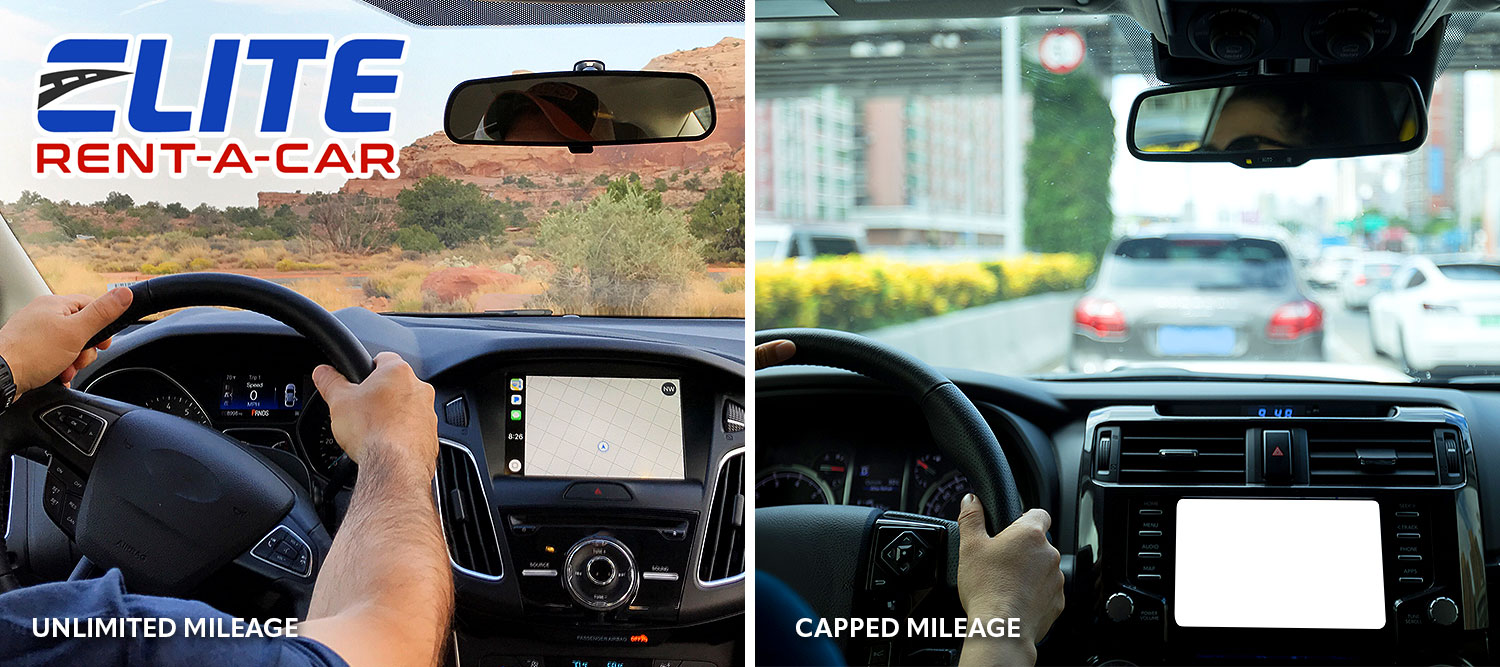
Here is a clear comparison of unlimited mileage vs capped (limited) mileage in car rentals so you can see the key differences at a glance.
Unlimited Mileage
- You can drive as far as you want during your trip without incurring extra distance fees.
- Most major brands offer unlimited mileage on many vehicle types.
- This freedom and flexibility are great for long road trips, travel with many stops, or trips where you are not sure how far you will go.
- You do not need to monitor the odometer or worry about additional charges for driving extra miles.
- Sometimes“unlimited” may still include hidden restrictions, such as regional limits or special vehicles where the policy changes, so always check the contract.
Capped (Limited) Mileage
- A mileage cap means you are allowed a set number of miles or kilometers at no additional cost, typically per day or for the entire rental.
- If you go over that number, you pay an extra mileage charge for each mile or kilometer above the limit (often about $0.10–$0.25 per mile).
- Limited mileage can lower the base rental price, especially for short trips.
- This option is often best when you plan short drives within a single area and know exactly how far you will travel.
- You must monitor your mileage closely, or you may incur additional charges that increase your total cost.
How to Compare Them
| Feature | Unlimited Mileage | Capped (Limited) Mileage |
| Drive distance | No limit on miles | Cap on miles before extra cost |
| Best for | Long-distance trips, flexible travel | Short drives with known distance |
| Extra fees | Rare for miles | Extra charges if you exceed the cap |
| Monitoring | No tracking needed | You need to watch your miles carefully |
| Cost | Sometimes a higher base price | Lower base price but risk extra fees |
Unlimited mileage gives you flexibility if you drive frequently, while limited mileage can save money on short trips where you will not go far.
Cost Considerations
When you choose between unlimited and capped mileage for your car rental, the amount you pay can vary significantly depending on your travel plans and rental price structure. Both options offer cost benefits and potential additional charges you should understand before booking.
Which Option Costs More Upfront
Usually, unlimited mileage cars have a higher base price than cars with capped (limited) mileage because the rental company is offering the freedom to drive more miles without extra fees. That higher upfront rent can range from about $10–$20 per day more than a comparable limited-mileage car.
When Capped Mileage Can Be Cheaper
If you plan short trips or know you will stay within a small area, capped mileage can be cheaper overall because the base rental cost is often lower. The catch is that you must watch your miles carefully and stay under the mileage limit.
Extra Fees on Capped Mileage Cars
If you exceed the mileage limit on a limited option, the rental company will charge you for each mile or kilometer over the limit. These extra charges can range from $0.15 to $0.30 per mile, depending on the company and location. That means high extra mileage fees can quickly make a cheap rental expensive.
When Unlimited Mileage May Save Money
For long road trips, traveling across multiple states, or situations where the total distance is uncertain, unlimited mileage can actually save money. You do not have to track your miles or worry about overage charges, which can add up fast on a long trip.
Other Costs to Think About
Even with unlimited mileage, you may still incur additional charges such as fuel fees, insurance add-ons, or airport pickup fees that affect the total cost. These fees are separate from mileage rules, but they also change the final price you pay for your rental.
How to Compare Costs Before Booking
To make the best choice:
- Add the total cost of both unlimited and capped mileage options before you book.
- Estimate how many miles you will drive.
- Check the rental agreement for per-mile fees if you choose capped mileage.
- Use online filters to find deals that match your needs.
Understanding these cost factors can help you choose the best mileage policy for your travel style and budget.
How to Choose the Right Mileage Policy
Choosing between unlimited mileage and capped (limited) mileage for your car rental depends on your travel needs, how far you plan to drive, and your budget. To make the best choice, consider the following key factors that affect what’s right for you.
1. Think About How Far You Will Drive
Before you book a rental, estimate the total miles you expect to drive during your trip. You can use a GPS tracking app or a map tool to help determine this. If your trip involves long distances and frequent stops, unlimited mileage is often the better choice because it lets you drive freely without incurring extra distance fees.
If your trip involves only short drives, such as airport pickup to your hotel or city sightseeing with a known mileage cap, capped mileage may be a good fit and cost less upfront.
2. Consider the Rental Duration
The number of days you plan to keep the car matters. For longer rentals, unlimited mileage provides peace of mind and predictable costs, especially when your itinerary may change or includes long daily drives.
For short rentals, limited mileage often results in a lower base rental price, and you may not exceed the mileage cap.
3. Review Vehicle Type and Company Policies
Different vehicle types can have different rules. Standard economy cars, compact cars, and mid-size sedans often include unlimited mileage, while some luxury vehicles, large SUVs, or specialty cars may offer limited mileage or charge extra fees.
Also, check the rental agreement to see whether unlimited mileage still has restrictions, such as regional limits (for example, not valid across international borders).
4. Look at the Total Cost
To choose the best mileage policy, calculate the total cost of both options before you book:
- Add up the base rental price for unlimited and capped mileage.
- Estimate any extra mileage charges you would pay if you exceed a capped limit.
- Compare the options based on the number of miles you plan to drive.
5. Use Tools to Compare Deals
Online travel tools like KAYAK let you filter car rentals by mileage policy. You can use unlimited mileage in the search filters to see only cars that offer it. This helps you find the best deal that matches your planned distance and budget.
6. Read the Fine Print
Always check the rental contract for details about mileage rules and extra charges. Some rentals labeled “unlimited mileage” may still impose limits or apply additional conditions on certain vehicles or for long rental periods. Knowing the exact terms helps you avoid surprise charges later.
By considering how far you will drive, how long you need the car, and the total cost, you can choose a mileage policy that fits your travel plan and keeps your rental price predictable and fair.
Common FAQs About Car Rental Mileage
Here are clear answers to the most asked questions about mileage limits on car rentals. These explain what happens in real life when you rent a vehicle and deal with unlimited mileage, mileage caps, and extra charges.
Q1. What is the mileage limit on a rental car?
A mileage limit, also called a mileage cap, is the number of miles or kilometers you can drive your rental car before incurring additional charges. If you exceed this limit, you will incur an additional fee per mile or kilometer.
Q2. What does unlimited mileage mean?
Unlimited mileage means you can drive the rental car as far as you want during your rental period without paying additional distance charges.
Q3. Is unlimited mileage always truly unlimited?
Not always. While unlimited mileage means no charges for most trips, some rentals still have limits for long durations, certain vehicles, or specific regions. Always read the rental agreement to check the terms.
Q4. What happens if I go over the mileage cap?
If you exceed the mileage limit on a capped rental, you will be charged a fee for each extra mile or kilometer at the end of your trip.
Q5. Do all car rental companies offer unlimited mileage?
Many major brands offer unlimited mileage on most cars, but not all companies or vehicles do. Smaller local suppliers or luxury/specialty vehicles may use capped mileage instead.
Q6. Is unlimited mileage better for long trips?
Yes. Unlimited mileage is usually the better choice for long road trips or when you expect to drive a lot, as it avoids extra mileage fees.
Q7. Is capped mileage cheaper upfront?
Yes. Capped (limited-mileage) rentals typically start at a lower price, making them more cost-effective for short, predictable drives.
Q8. Can I upgrade from capped to unlimited mileage?
In some cases, you may be able to request an upgrade to unlimited mileage, but this depends on the rental company’s policies.
Q9. How do I avoid extra mileage charges?
Plan your travel itinerary before you book, choose a mileage policy that fits your distance, and read the fine print in the rental agreement.
Q10. Should I use a GPS or an app to track mileage?
Yes. Using a GPS tracking app or checking the odometer during your trip can help you stay within the capped mileage limit if you choose a capped mileage plan.
Conclusion
Choosing the right car rental mileage policy can make a big difference in your travel cost, stress level, and how freely you explore your destination. If you plan long drives or a road trip, unlimited mileage often makes sense because you avoid worrying about mileage caps or per-mile charges, no matter how far you go. This gives you more freedom and flexibility on the road. If your trip is planned, short drives with a known distance, capped (limited) mileage may save you money with a lower rental price upfront. Always read the rental agreement to understand possible fees, restrictions, and conditions. No rental policy is truly unlimited in every situation.